Forklifts
How to choose the right category for the work.
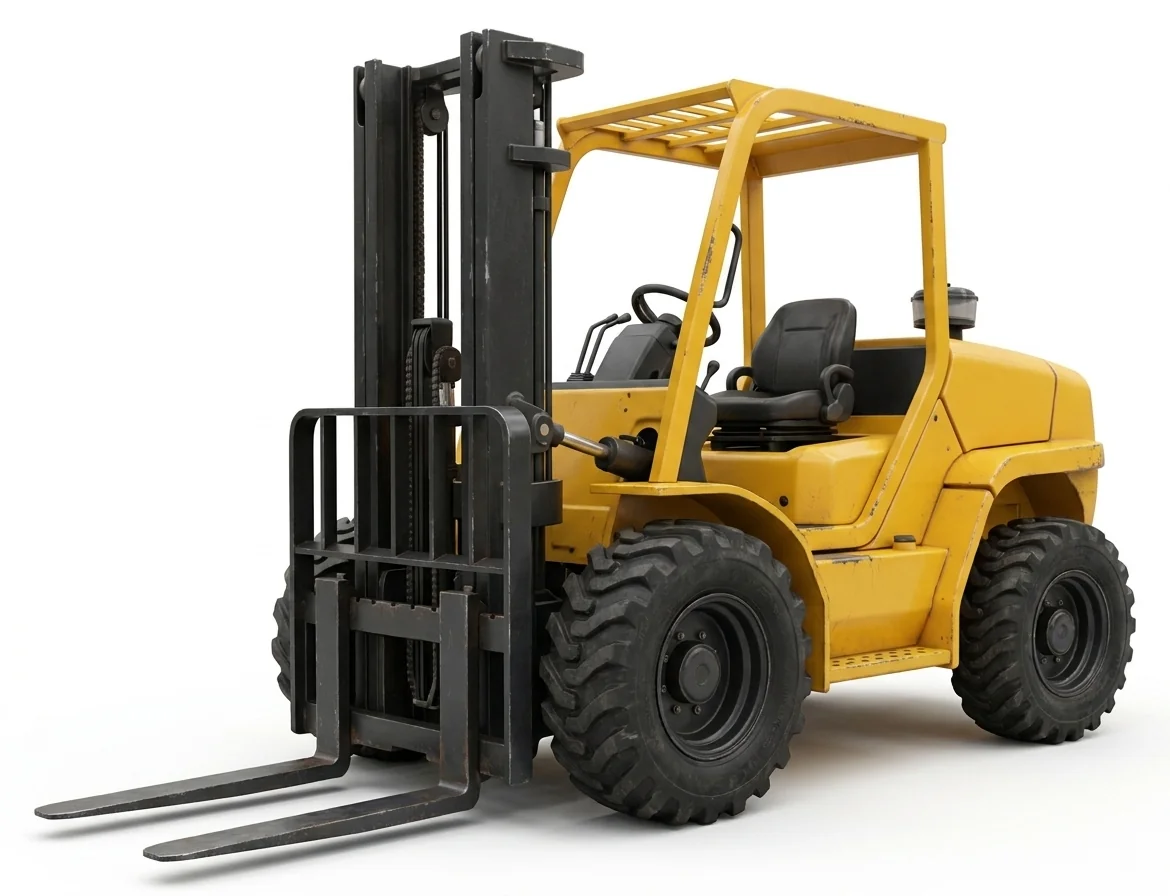
Forklifts lift, carry, and stage materials between trucks, docks, aisles, racking, and work areas. Warehouse and rough-terrain categories are compared around the floor or ground, the route, the load, and the height of the placement point.
Published forklift classes commonly span about 5,000–15,000 lb capacity and 10–20 ft lift height. The available machine’s capacity, mast configuration, tire type, power type, and operating dimensions determine the final fit.
Describe the pallet or material, maximum load, lift height, route width, floor or ground, indoor/outdoor setting, and loading or staging pattern. These details help separate a warehouse conversation from a rough-terrain material-handling conversation.
Projects in Dayton and nearby Kettering, Beavercreek, Huber Heights can include interior maintenance, warehouse work, commercial construction, and exterior access tasks. The correct equipment category still depends on the measured work area, not the city name alone.
Questions that make the equipment discussion more useful
- What is the heaviest load?Use the actual material weight and any attachment requirements to start the capacity discussion.
- Where does the material travel?Measure aisles, dock areas, gates, turns, and the route from pickup to placement.
- What is under the tires?Flat indoor concrete, pavement, gravel, or open ground may point to different equipment categories.