What drives lift selection in Dayton
Planning starts with where the platform must work relative to the task. In local distribution buildings with tall racking, an electric slab scissor often needs to sit under the pick face with enough platform capacity and a compact footprint to turn inside narrow aisles. In large industrial spaces that support heavy assembly and maintenance, gate widths, mezzanine openings, and floor loading limits shape what can enter the work zone.
Outdoor projects around the river valley or on mixed aggregate yards bring different constraints. Surface variability, slope allowances, and tire type matter more than platform size alone. The regional climate adds another layer: equipment may face wet conditions and temperature swings across seasons, which can influence traction needs, hydraulic responsiveness, and battery performance.
How local facilities change the comparison
- High-bay warehouses: check turning radius, platform height ranges common to indoor racking, and non-marking tires for finished slabs.
- Industrial and aerospace work areas: verify gate and door clearances, weight limits on suspended floors, and outreach needs for obstacles around tooling or utilities.
- Exterior maintenance at campuses and plants: consider rough-terrain ratings, ground pressure, and how seasonal precipitation affects access routes and staging areas.
Narrowing the category
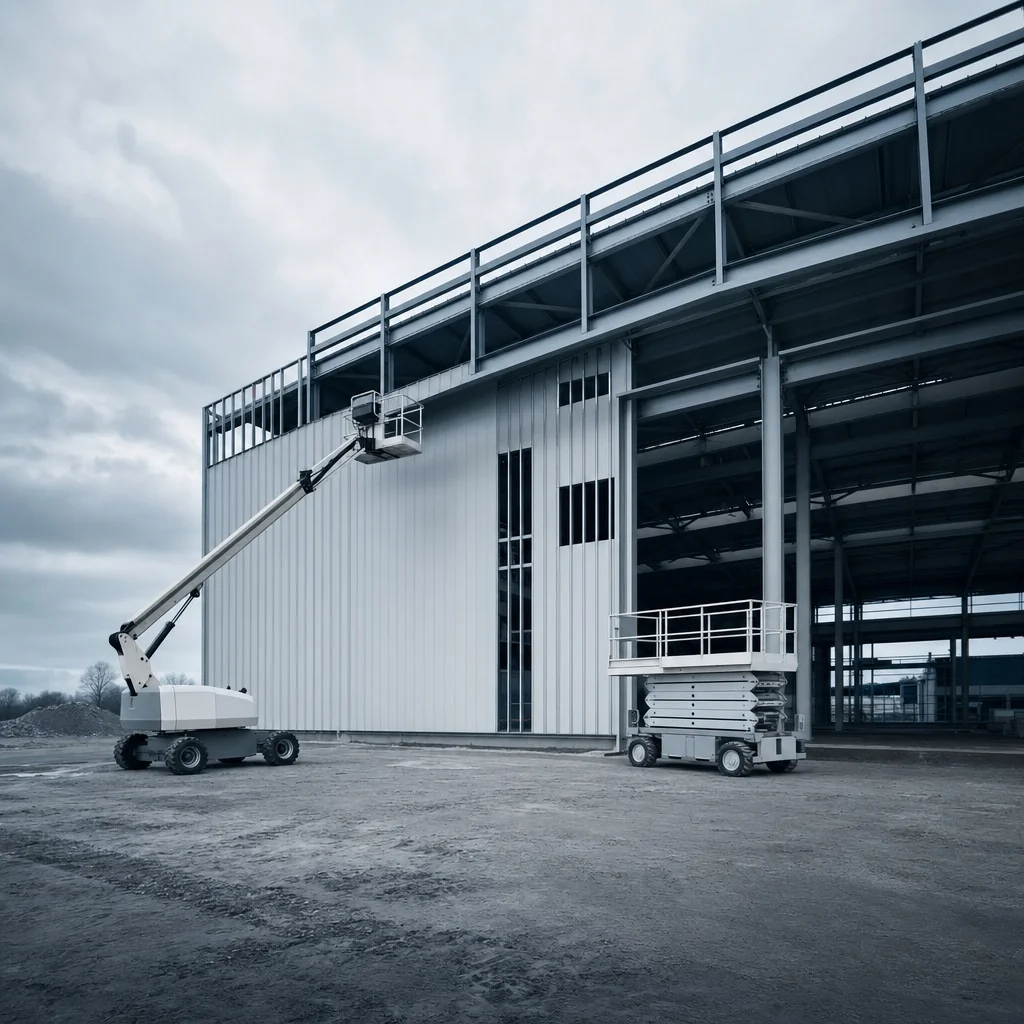
Once the work geometry and surface are defined, most choices fall into three buckets: - Electric scissor lifts for indoor slabs when low noise and zero-emission operation are preferred. See /electric-scissor-lift-rental/. - Rough-terrain scissor lifts for uneven surfaces, staging on compacted fill, or work that needs more platform capacity outdoors. See /rough-terrain-scissor-lift-rental/. - When vertical reach or up-and-over access is required, compare boom lifts by outreach envelope before platform size. Start with /boom-lift-rental/ and refine at /articulating-boom-lift-rental/ or /telescopic-boom-lift-rental/.
What this site covers
Expect straightforward equipment comparisons, references to common Dayton site conditions, and links to related categories when the task suggests a different machine. For material handling or staging support, /telehandler-rental/ and /forklift-rental/ may be relevant. Site logistics often benefit from jobsite power and perimeter planning, so /generators-light-towers-rental/, /storage-containers-rental/, and /temporary-fencing-barricades-rental/ are included.
Actual site conditions, the selected unit’s instructions, and your procedures govern elevated work. The information here is intended to clarify how Dayton-specific factors affect the initial comparison so conversations with a rental provider are more efficient.