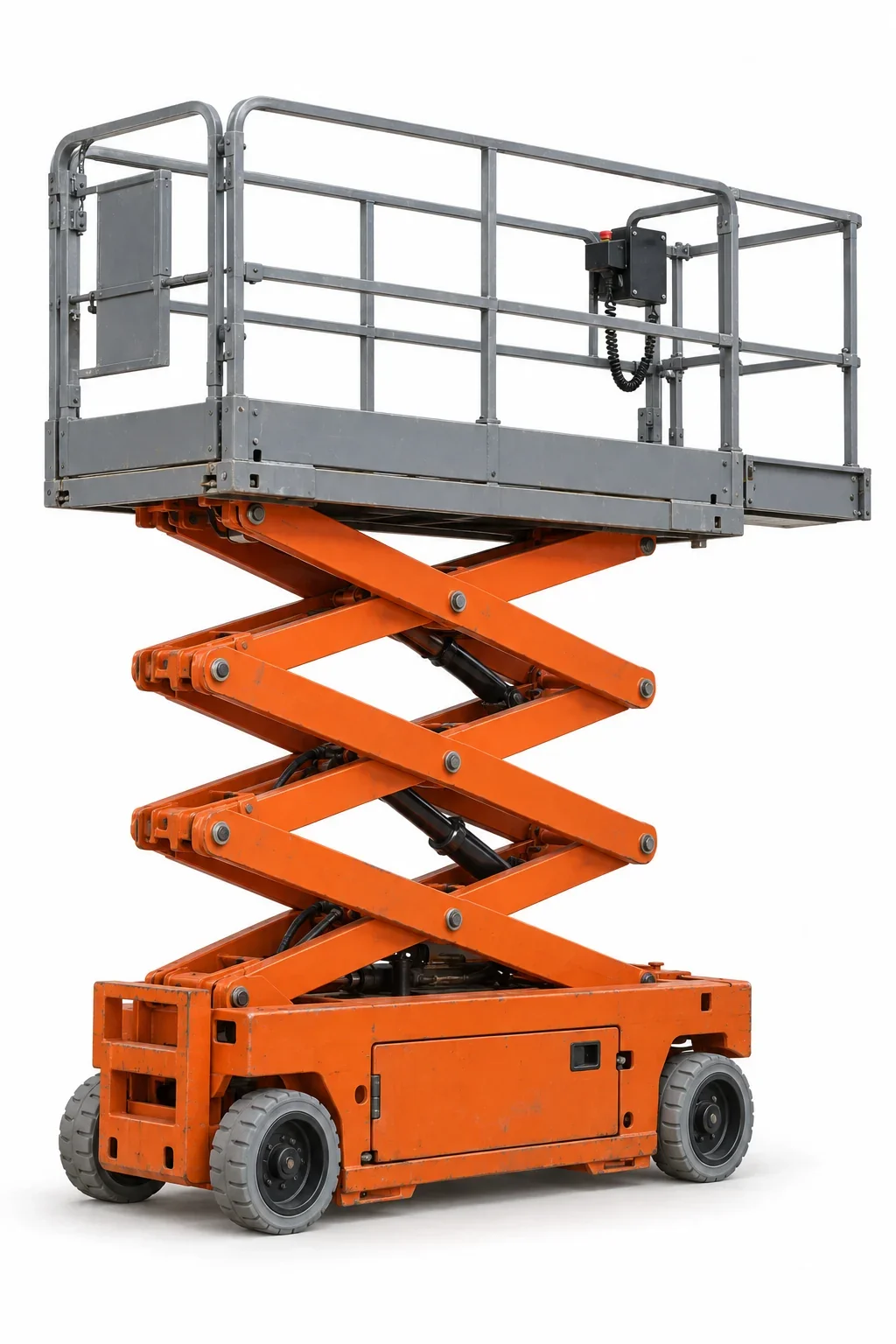
Job geometry comes first
- Can the lift sit directly below the work? Electric scissors travel straight up; if ductwork, conveyors, or mezzanines block the approach, consider alternatives at /aerial-lift-rental/.
- Measure aisle width and turning space. Compact models navigate tighter racking and service corridors; larger platforms increase workspace but need wider clearance.
Local interior considerations
- Polished slabs and sealed floors favor non-marking tires and precise controls. Many local facilities require low noise and zero on-site emissions during operating hours.
- High-bay racking near the logistics corridor often means long in-building travel. Battery capacity and charger access along the route matter as much as platform height.
Platform height and deck configuration
- Select a platform height that reaches the task with room for tools and materials. Extension decks can reduce repositioning along long runs of fixtures or cable tray.
Battery performance in the regional climate
- Cold snaps typical of the area reduce discharge efficiency and may extend charge times. Plan for conservative runtime estimates during winter months and allow batteries to reach full charge before extended shifts.
Floor loading and building protections
- Verify slab capacity for heavier units and any mezzanine restrictions in older structures. Protect sensitive finishes at thresholds and expansion joints when moving larger chassis.
When to step outside the category
If the task requires reaching over lines or machinery, an articulating or telescopic boom at /boom-lift-rental/ can provide horizontal reach not available from a scissor.
Related links
- Aerial Lifts Overview: /aerial-lift-rental/
- Boom Lifts: /boom-lift-rental/
- Rough-Terrain Scissors for exterior tasks: /rough-terrain-scissor-lift-rental/